
Introduction
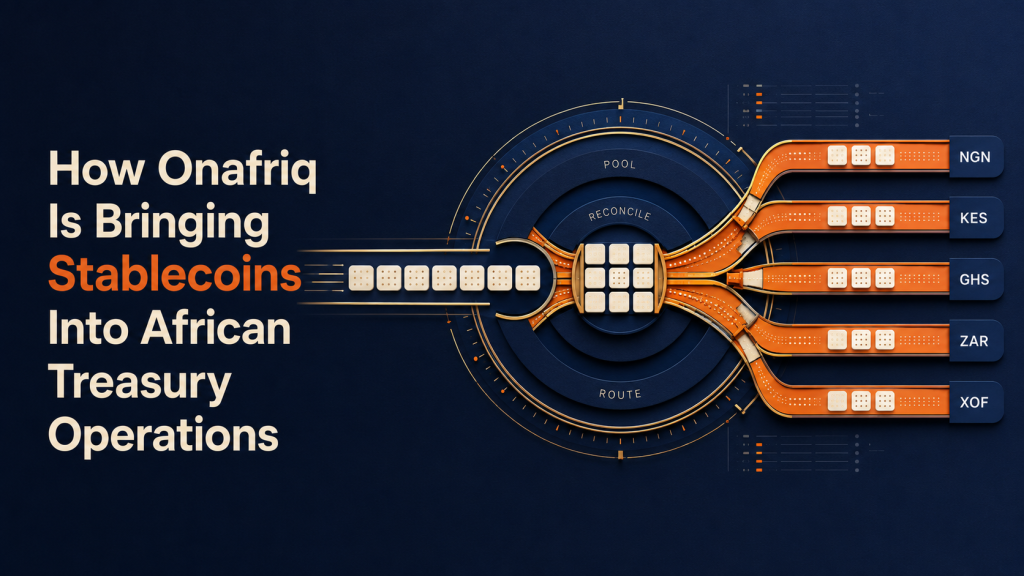
Moving money across Africa has never been simple. Onafriq – the payments network connecting banks, mobile money operators, merchants, and enterprises in 43 African markets, linking over a billion mobile wallets and 500 million bank accounts, knows this better than most.
Now the company is betting that stablecoins can make its own treasury operations faster, clearer, and less dependent on a chain of intermediaries.
The Problem With Moving Money Across Borders
Even as digital payments have taken off across the continent, the mechanics behind the scenes remain complicated. Treasury teams at multi-country payments companies have to juggle liquidity pools in different markets, coordinate settlement between counterparties, and route transactions through a tangle of banks, currencies, and payment rails. Each handoff adds friction, delay, and cost.
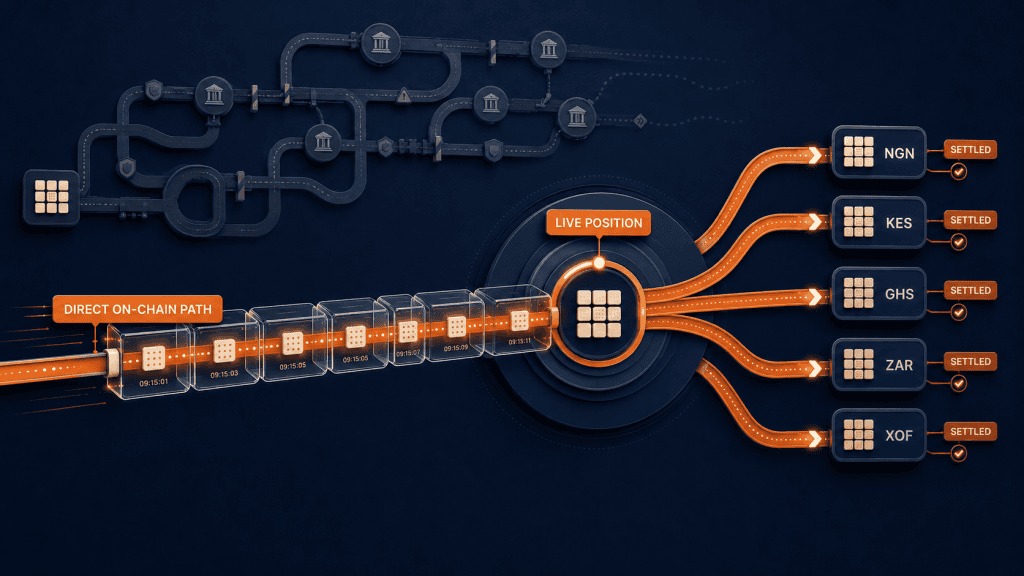
Stablecoins offer a more direct path. By settling value on-chain, businesses can move funds faster, cut out redundant intermediaries, and get real-time visibility into where their money actually is. For a network as large and multi-jurisdictional as Onafriq’s, that visibility and speed translate directly into a more efficient treasury operation.
Choosing Wallet Infrastructure That Could Scale
To act on that opportunity, Onafriq built its stablecoin strategy on top of Privy’s programmable wallet infrastructure. Rather than standing up and maintaining its own wallet stack, and separately integrating with every liquidity and off-ramp provider it might need – Onafriq used Privy as a single infrastructure layer, plugging into partners like Bridge for on- and off-ramping, with room to add more over time.
That let the Onafriq team move quickly: production use of programmable wallets to manage treasury balances and coordinate settlement is already live, rolling out in phases ahead of a fuller launch.
Luke Kyohere, Onafriq’s Group Chief Product and Innovation Officer, put it simply: the goal is to build the foundations for faster settlement and more efficient liquidity management, strengthening Africa’s payment ecosystem within existing regulatory frameworks.
Treasury Today, Customer Payments Tomorrow
What’s notable is where this could go next. The wallet and settlement infrastructure Onafriq is using internally for treasury management is the same kind of infrastructure that can power customer-facing payment flows, payouts, collections, and cross-border transactions for any business moving value into or across Africa.
In other words, Onafriq isn’t just modernizing its own back office. By starting with treasury, it’s laying the groundwork for stablecoin-powered payments at a much larger scale, one where corporates, fintechs, and other players across the continent could eventually plug in too.
Why This Matters for Africa’s Blockchain Ecosystem
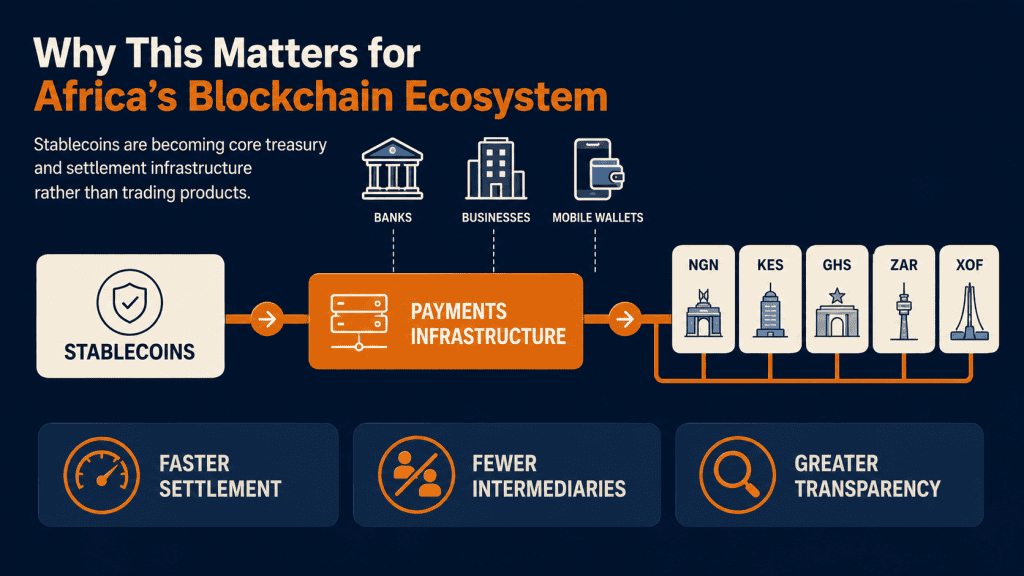
Onafriq’s move is a signal of where institutional stablecoin adoption in Africa is heading: not just as a trading or remittance tool, but as core payments infrastructure for treasury and settlement.
As more corporates look for reliable, efficient rails to move capital across African markets, integrations like this one point to what a mature stablecoin-powered payment ecosystem on the continent could look like, faster settlement, fewer intermediaries, and far greater transparency into how money actually moves.
Conclusion
Onafriq’s adoption signals stablecoins’ shift from speculative assets to practical financial infrastructure. By starting with treasury operations, the company can test their ability to improve liquidity management and settlement before expanding into customer payments. The move demonstrates how stablecoins could complement existing systems by making cross-border payments faster, more transparent and more reliable across Africa.